
Cleveland County Arrest Records and Charges
Arrest records in Cleveland County usually begin with the agency that took the person into custody. The Cleveland County Sheriff's Office, led by Sheriff Alan Norman, publishes custody and event tools through its P2C system. A booking entry may show a name, primary charge, arrest date, and booking agency before the full court file has caught up. That early record is useful, but it is not the same thing as the final criminal court record.
After arrest or citation, the charge record moves into the North Carolina General Court of Justice. District Court handles many misdemeanors, infractions, first appearances, and traffic-related matters. Superior Court handles felony trial jurisdiction and major criminal proceedings. The Clerk of Superior Court keeps the court file, while the District Attorney for Prosecutorial District 39 decides how the State will prosecute charges after law enforcement has made the arrest.
For jail custody and current booking detail, use the Cleveland County inmate records page. For the full case file, pleas, motions, judgment, and sentence, use criminal court records. Court charges after arrest sit between those two points: they explain what offense was filed, whether it changed, and whether it was dismissed, reduced, tried, or resolved by plea.
The Cleveland County Sheriff's Office homepage identifies Sheriff Alan Norman and links the local law-enforcement tools that support arrest-record research.
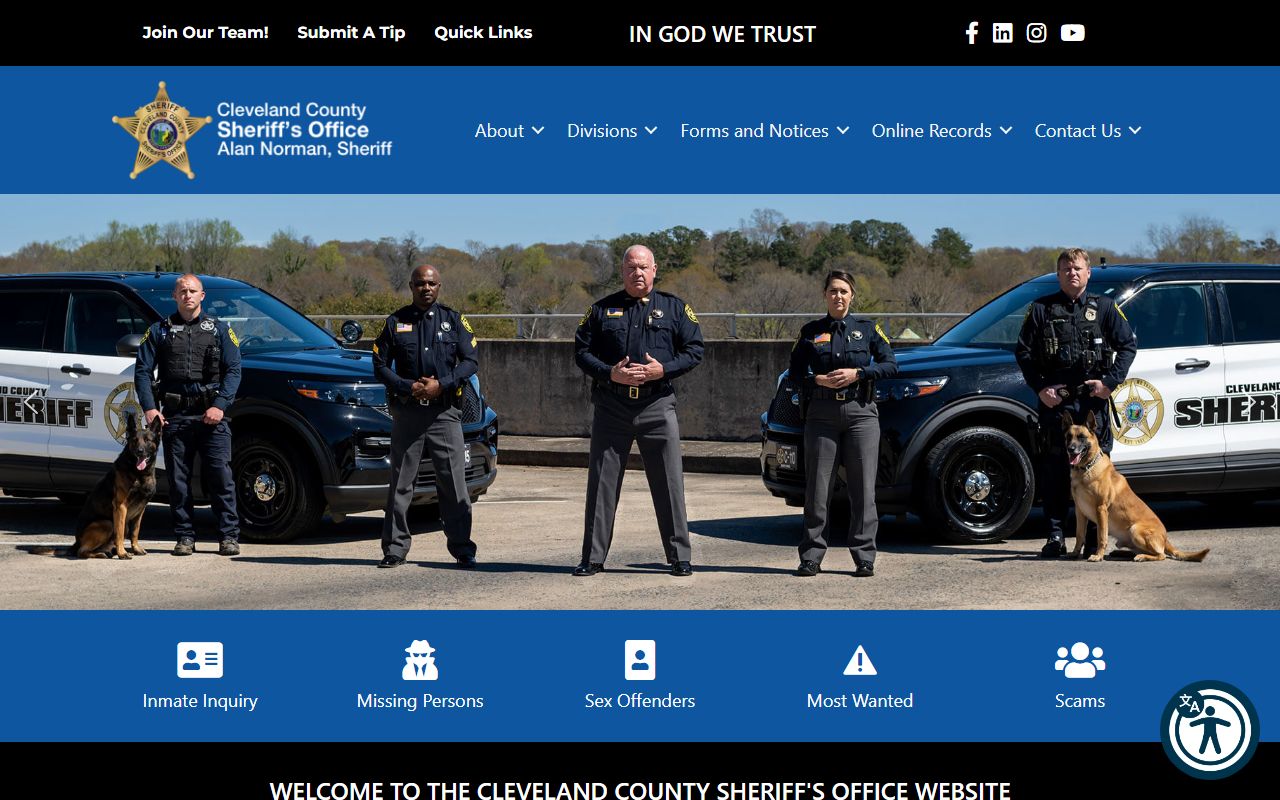
The Sheriff's site is the right starting point for custody and event information, while filed charges and outcomes must be checked in the court system.
Find Cleveland County Court Charges
A practical search starts with the source that matches the question. If the question is whether someone is in jail now, use the Sheriff P2C inmate inquiry. If the question is what charges were filed in court, search the North Carolina eCourts Portal and confirm full files with the Cleveland County Clerk of Superior Court. If the question is a recent event or call for service, the Sheriff's P2C Daily Bulletin can help, but a bulletin is not a conviction record.
- Search the jail roster or Daily Bulletin first when the arrest is recent and no court case number is known.
- Search eCourts by defendant name, case number, or citation number when court charges may already be filed.
- Open each matching case and read the charge description, offense date, court level, next hearing, and case status.
- Call or visit the Clerk of Superior Court for certified copies, older paper files, or a background search based on clerk terminals.
North Carolina's Judicial Branch warns that background checks and local case documents should be handled through the county clerk, not through the statewide public-record request form. The court-record access rule in G.S. 7A-109 makes clerk-maintained court records open during regular office hours unless another law restricts access. That rule matters because arrest records from law enforcement and charge records from the court may have different custodians.
The Cleveland County Sheriff P2C Daily Bulletin is one of the local sources for recent law-enforcement event records.
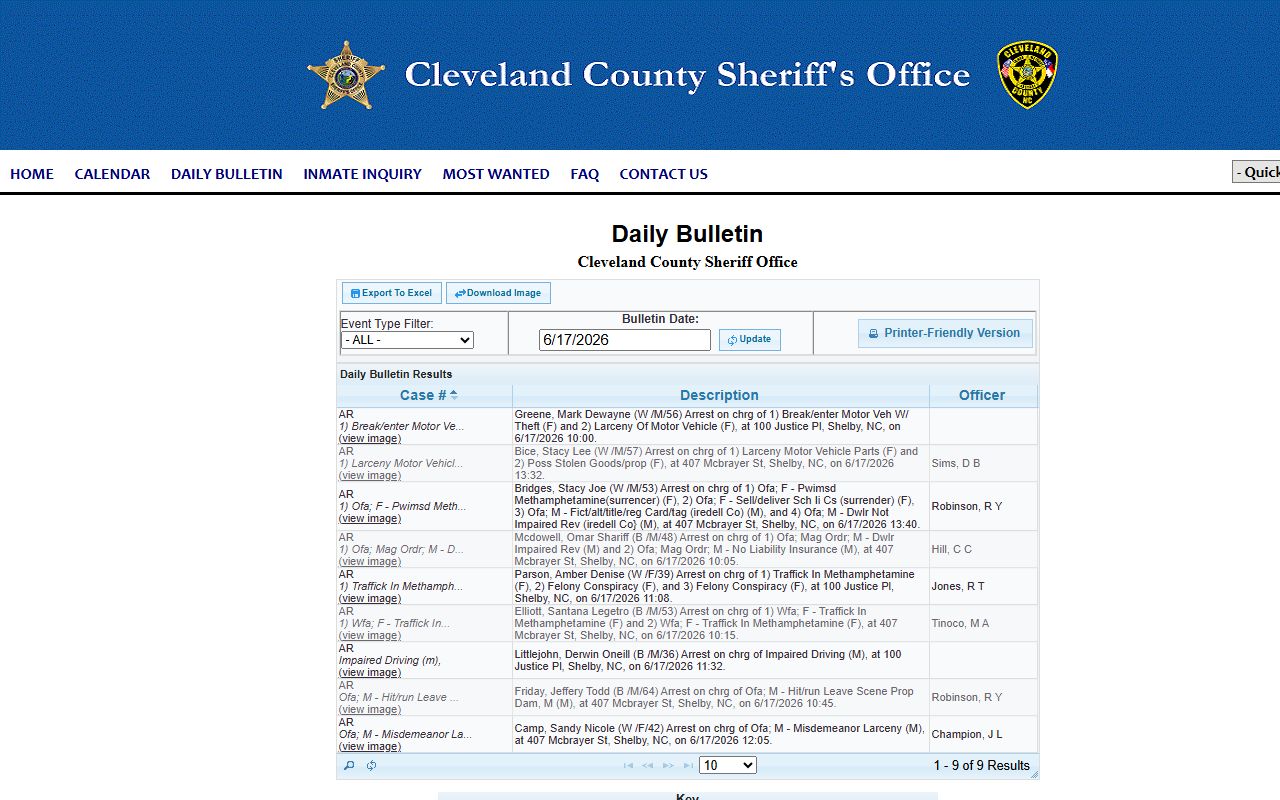
Daily Bulletin entries can provide an early lead, but filed court charges still need to be checked through eCourts or the clerk.
Charging Documents After Arrest
A court charge record begins with a formal accusation. In a low-level case, the first document may come from a citation, warrant, magistrate process, or criminal complaint. In more serious felony matters, the record can later include an indictment that moves the case into Superior Court. The District Attorney, listed by the North Carolina Conference of District Attorneys as Mike Miller for Prosecutorial District 39, represents the State in Cleveland and Lincoln counties.
One arrest can produce more than one charge. A person may be booked on a primary charge in the P2C grid while the court file later shows added, reduced, or dismissed counts. That is why charge research should not stop at the first booking label. Read the court docket, then compare each count with the disposition.
| Document | Who Starts It | How It Appears | Common Use |
|---|---|---|---|
| Complaint or warrant process | Law enforcement, magistrate, or prosecutor | Initial criminal allegation and probable-cause basis | Misdemeanors, arrests, and early criminal process |
| Information | Prosecutor | Formal prosecutor-filed charge without grand-jury indictment | Cases allowed by North Carolina procedure |
| Indictment | Grand jury after prosecutor presentation | Felony charging document that may move the case in Superior Court | Serious felonies and felony trial jurisdiction |
The District Attorney page for Prosecutorial District 39 identifies the local prosecution office for Cleveland County charge decisions.
Defense counsel and the public defender may appear in the court file as counsel of record, but attorney-client communications are not public charge records.
Cleveland County Charge Status
Charge status is the part of a court record that shows where the accusation stands. A pending charge is still open. A dismissed charge ended without a conviction. A reduced charge may show that the prosecutor accepted a lower offense or amended the count. Some North Carolina records use the term disposition for the result of a charge or case, such as guilty, dismissed, responsible, or not responsible.
| Status | What It Means | Where to Verify |
|---|---|---|
| Pending or open | The charge has not reached final disposition. | eCourts case docket or clerk terminal |
| Amended or reduced | The filed count changed from the first listed offense. | Charge history and later docket entries |
| Dismissed | The count ended without a guilty finding on that charge. | Disposition field and judgment entries |
| Guilty or responsible | The court entered a conviction or responsibility finding. | Judgment, sentence, fine, or probation fields |
| Expunged or sealed | Public access is restricted by order or statute. | Clerk confirmation, not public search alone |
Do not read a booking charge as the final result. A booking label may be broad, brief, or based on the arresting agency's first information. The court case should be checked for the statutory charge, plea, disposition date, sentence, probation terms, court costs, restitution, and any later expunction or sealing order.
Charge vs Conviction
A charge is an accusation. A conviction is a result after a guilty plea, guilty verdict, or other finding that creates a criminal judgment. Cleveland County arrest records may show a person was taken into custody, and a court charge record may show several counts, but neither one alone proves a final conviction. The disposition field is the key.
| Point | Charge | Conviction |
|---|---|---|
| Stage | Filed accusation after arrest, citation, warrant, or indictment | Final court finding or plea on a count |
| Proof level | Based on probable cause or formal charging process | Requires plea or proof beyond a reasonable doubt |
| Record field | Charge description, statute, offense class, and date | Judgment, sentence, probation, fine, or dismissal result |
| Practical risk | May later be reduced or dismissed | May affect sentence, probation, court costs, and criminal history |
For employment, housing, licensing, or credit decisions, do not use casual record lookup as a consumer report. Formal background checks have separate legal duties and accuracy rules.
Statewide Charge Sources
The NC DAC offender public information search covers state prison, probation, and parole status. It is useful after a Cleveland County case has led to state correctional supervision, but it is not the county jail roster and it is not the local court case file. A person in pretrial county custody should be checked through the Sheriff's inmate inquiry first.
The NC SBI Sex Offender Registry is another separate state source. Registry profiles may show name, aliases, photo, address, offense or conviction data, registration details, and compliance information. That registry is tied to public-protection law and qualifying offenses. It does not replace eCourts, the Clerk of Superior Court, or the Sheriff's P2C tools for a full Cleveland County arrest records and court charge search.
The NC DAC offender search helps distinguish state correctional custody from county arrest and charge records.
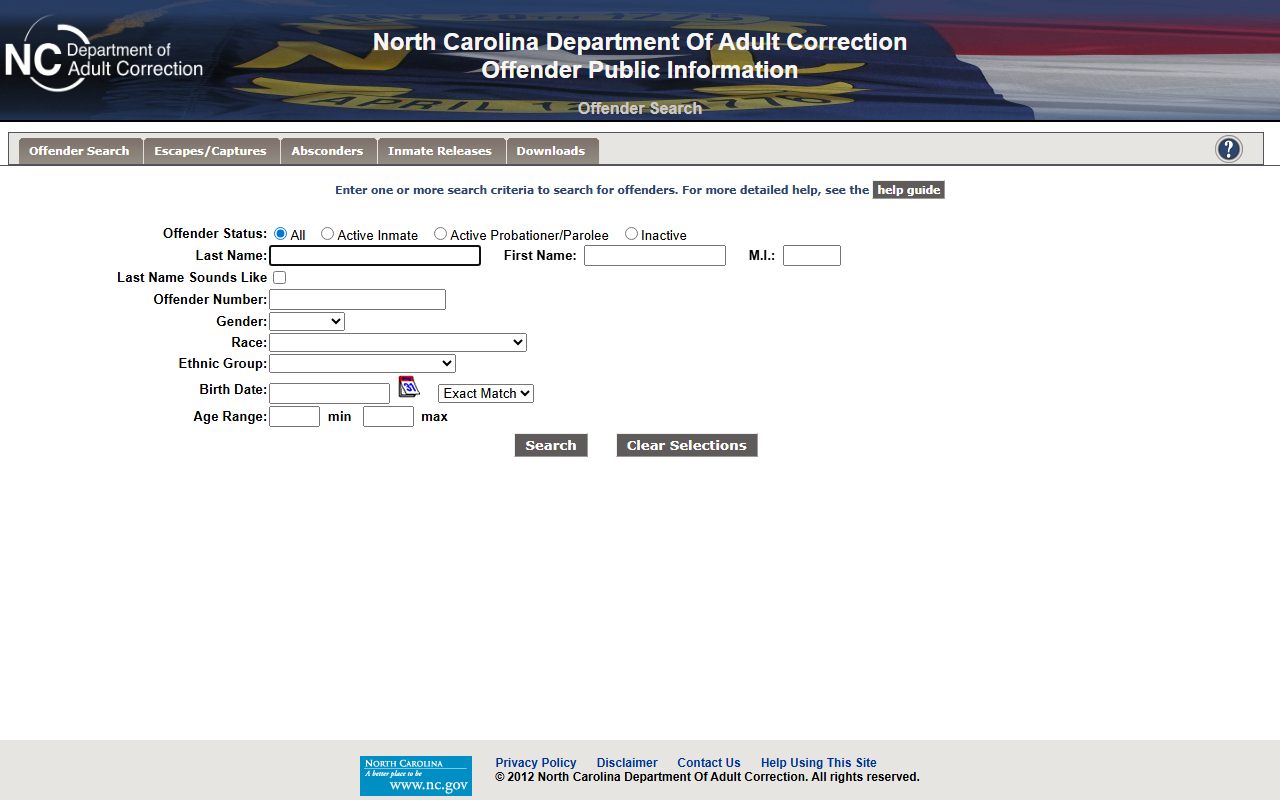
Use NC DAC after a case reaches state prison, probation, or parole, not as the first source for a new Cleveland County arrest.
The NC SBI registry is a state public-protection source that remains separate from Cleveland County court charge records.
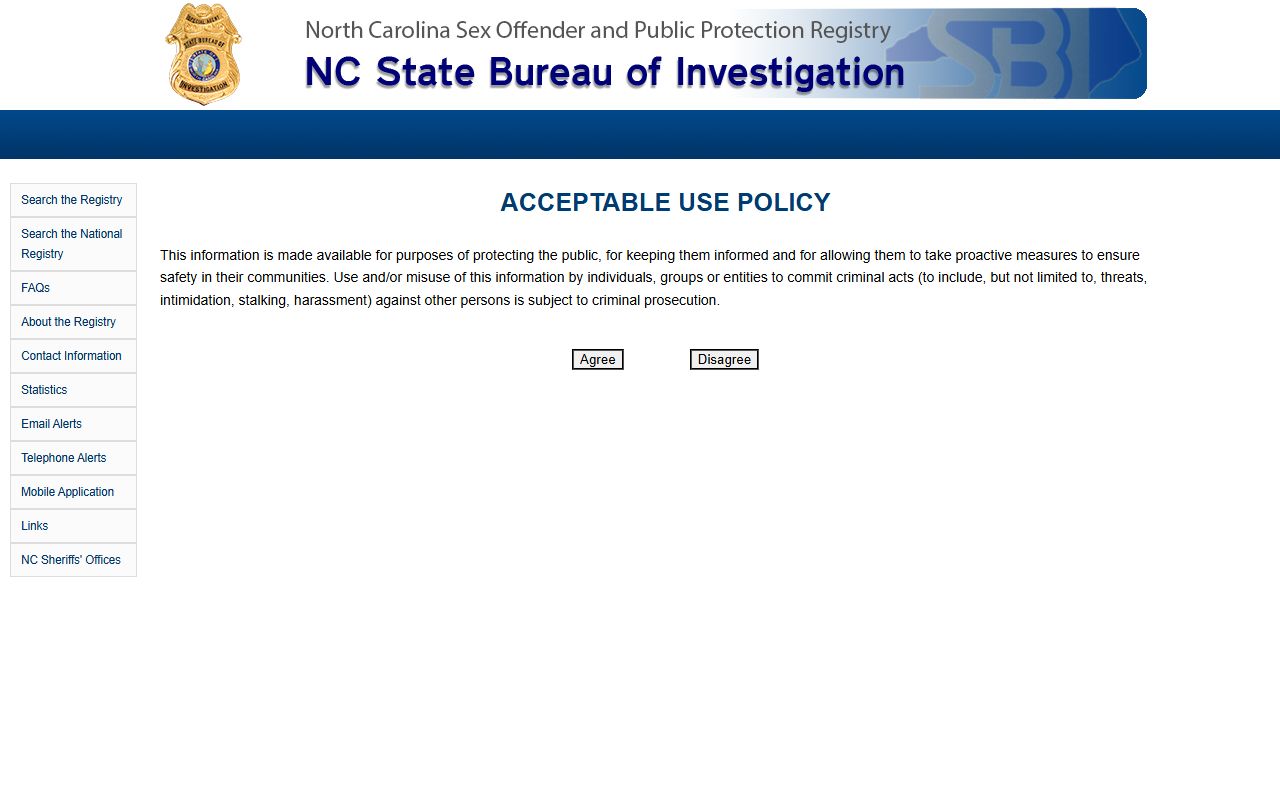
Registry status can reflect a qualifying conviction, but the court record is still the source for the underlying charge history and judgment.
Restricted Cleveland County Charge Records
Some charge records are not public in the same way adult criminal court files are. Juvenile delinquency and abuse, neglect, or dependency records are controlled by Chapter 7B and are not ordinary public adult files. Sealed records may be hidden by court order or statute. Expunged records are removed from normal public access when the court enters a valid expunction order.
North Carolina law also protects personal identifying information, financial account numbers, protected addresses, sensitive victim information, and some mental-health material. A public search may show no result, a limited result, or a case that looks incomplete because the record is restricted. The clerk can explain access logistics, but the absence of a public result should not be treated as proof that no sealed or expunged matter ever existed.
| Record Type | Public Access Issue | Best Cleveland County Check |
|---|---|---|
| Juvenile charge | Not a normal adult public court file | Authorized party or court order |
| Sealed case | Hidden or limited by statute or order | Clerk of Superior Court guidance |
| Expunged charge | Removed from normal public systems | Expunction order and clerk process |
| Investigative record | May be withheld by law enforcement | Sheriff or county records request |
Note: A dismissed charge may still appear in a court record unless it is later sealed or expunged under North Carolina law.