
Cleveland County Criminal Court Records
A Cleveland County criminal court record begins when a criminal matter becomes a court case. It may start from an arrest, citation, warrant, magistrate process, indictment, or prosecutor action, but the court file is the record kept by the Clerk of Superior Court. The file can show the charge as filed, court events, arraignment or first appearance activity, bond orders, motions, hearing dates, plea or trial result, disposition, sentence, restitution, court costs, and probation terms.
North Carolina divides criminal work between District Court and Superior Court. District Court handles many misdemeanors, infractions, traffic misdemeanors, and early felony proceedings. Superior Court has felony trial jurisdiction and handles many cases after indictment or transfer. Cleveland County is in Prosecutorial District 39, Superior Court District 39, and District Court District 39. The District Attorney for Prosecutorial District 39 prosecutes cases in Cleveland and Lincoln counties, while eligible indigent defendants may be served through Defender District 39. The Cleveland County court contact directory lists local numbers for the clerk, judges, district attorney, magistrate, and other court offices.
The Judicial Branch criminal background check source in the manifest comes from the official criminal background check guidance.
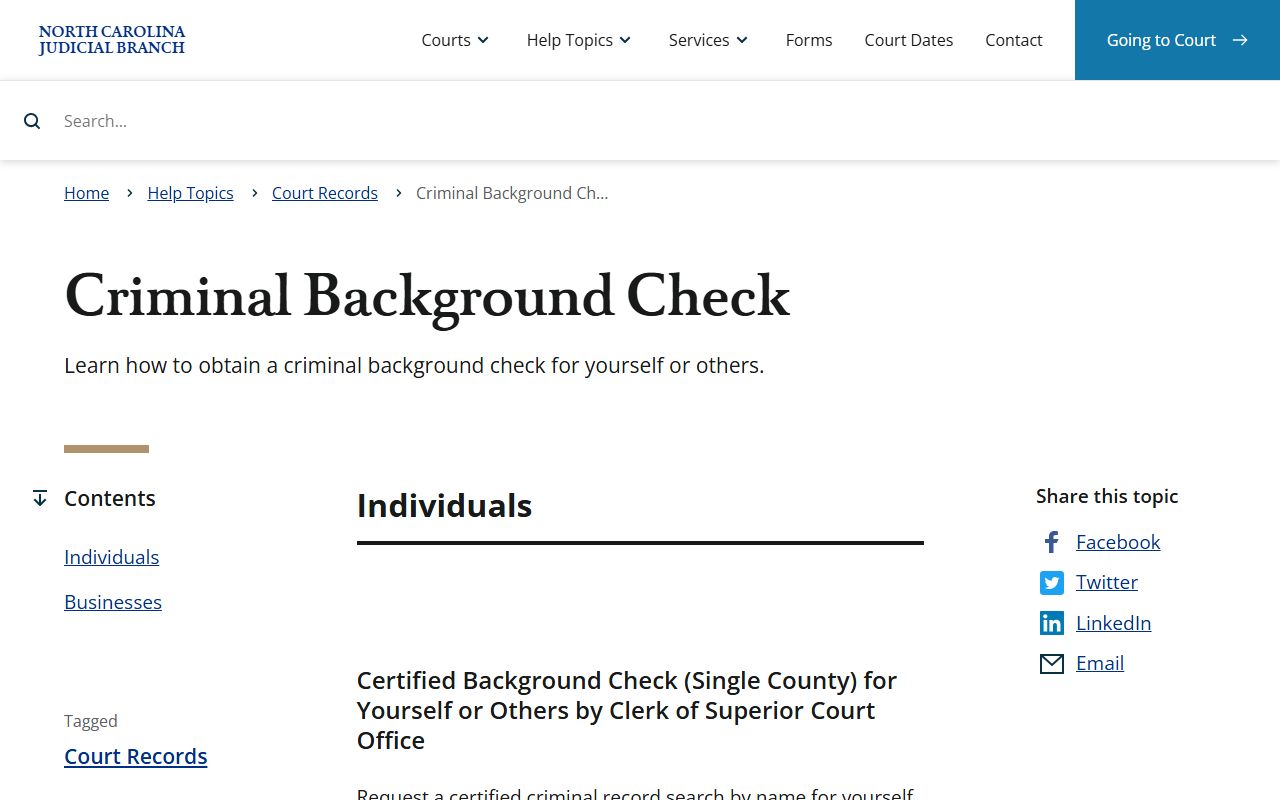
That source is important because it tells users to use clerk offices and official search channels for criminal court record and background-search needs.
Search Cleveland County Criminal Cases
Start with the North Carolina eCourts Portal for public online case information. Cleveland County entered eCourts on October 13, 2025, so the Portal is now the main online path for public criminal case details, hearings, court dates, documents that are available to the public, and eligible payments. When the Portal does not supply the needed record, use the public terminal or clerk office at the Cleveland County Courthouse. The Cleveland County Courthouse page gives the local courthouse location, public hours, and main court number.
- Open the eCourts Portal and search by defendant name, case number, citation number, attorney, or other available field.
- Filter to Cleveland County when the location filter appears, because the Portal covers all North Carolina counties.
- Open the criminal or infraction result and compare the charge, court level, case status, hearing list, and docket entries.
- Read the disposition and sentence fields only after confirming that the entry belongs to the right person and case number.
- Request certified copies, older records, or criminal background searches through the Clerk of Superior Court at (704) 476-7800.
Public self-service terminals remain important. The official court-record help topic says criminal cases can be searched at clerk terminals by defendant name, case number, or victim or witness name. The Judicial Branch also warns that its public-record request form is not the channel for local case documents or civil and criminal background searches. Those records route to the county clerk where the case was filed.
Cleveland County Criminal Case Flow
A criminal court record should be read as a process record. One entry rarely tells the full story. A charge may be amended. A hearing may be continued. A felony may begin with a magistrate or District Court event before moving to Superior Court. A misdemeanor or infraction generally begins and remains in District Court unless there is an appeal. A District Court conviction can be appealed to Superior Court for a new trial in many criminal and infraction contexts.
Case flow: Charges Filed › Arraignment or First Appearance › Pretrial and Motions › Plea or Trial › Disposition › Sentencing
| Stage | What Happens |
|---|---|
| Charges Filed | The allegation enters court through citation, warrant, magistrate process, information, or indictment. |
| Arraignment or First Appearance | The defendant appears, conditions may be addressed, and the case begins its court schedule. |
| Pretrial and Motions | Parties file requests, address evidence, seek continuances, or resolve preliminary issues. |
| Plea or Trial | The case is resolved by plea, bench trial, jury trial, dismissal, or another court action. |
| Disposition | The record shows the charge result, such as guilty, not guilty, dismissed, responsible, or other outcome. |
| Sentencing | The court records punishment, costs, restitution, probation, jail or prison terms, and conditions when imposed. |
What Cleveland County Criminal Records Show
A Cleveland County criminal court record can contain more than a charge list. It may show court location, case number, defendant, offense date, arrest date, charge description, statute, offense class, bond, hearing dates, judge or magistrate, plea, finding, disposition, sentence, probation terms, restitution, court costs, attorney fees, payment status, dismissal entries, appeal notices, and warrants or orders tied to the case. The public view may also show redactions when protected data appears in the file.
| Field | What It Shows |
|---|---|
| Case Number | The unique Cleveland County criminal or infraction case identifier. |
| Defendant | The person accused in the criminal case, with identity details limited by public access rules. |
| Court Level | District Court for many misdemeanors and infractions, or Superior Court for felony trial jurisdiction. |
| Charges | Charge description, statute, offense class, and later changes when publicly shown. |
| Hearings | Court date, time, session, hearing type, and related docket activity. |
| Plea | The defendant's formal response, such as guilty or not guilty, when recorded. |
| Disposition | The outcome of a charge, such as guilty, dismissed, not guilty, responsible, or other result. |
| Sentence | Probation, custody term, fines, costs, restitution, conditions, or other ordered punishment. |
| Documents | Public orders, judgments, notices, or filings when available online or from the clerk. |
For a closer look at the allegation and charge path itself, use the separate Cleveland County court charge records material. The criminal court record is the larger case file that follows the allegation through plea, trial, disposition, and sentence.
Charges vs Convictions
A charge is an accusation. A conviction is an outcome after a guilty plea, responsible finding, verdict, or other qualifying court result. Cleveland County criminal court records may show charges that were dismissed, reduced, amended, merged for judgment, continued, appealed, or resolved without conviction. That distinction matters when reading a docket, a background check, a sheriff booking record, or a prosecutor entry.
| Point | Charge | Conviction |
|---|---|---|
| Meaning | An allegation filed in court. | A court outcome based on plea, verdict, or finding. |
| Timing | Appears near the start of the case. | Appears after disposition or judgment. |
| Record Risk | Can remain visible even if later dismissed unless restricted or expunged. | Can affect sentence, probation, costs, licensing, and later record checks. |
| How to Confirm | Review docket entries and charging documents. | Review the judgment, disposition, and sentence fields. |
Do not infer guilt from a charge entry. Confirm the final disposition, then confirm whether later appeal, expunction, or sealed-record activity changed public access.
Cleveland County Criminal Record Access
G.S. 7A-109 is the main North Carolina court-record statute for clerk-maintained files. It makes court records maintained by the clerk open to public inspection during regular office hours unless another law prohibits access. Criminal jurisdiction is addressed in Article 22 of Chapter 7A, which helps explain why misdemeanors, infractions, and felonies may appear in different court stages.
The District Attorney source in the manifest comes from Prosecutorial District 39, which covers Cleveland and Lincoln counties.
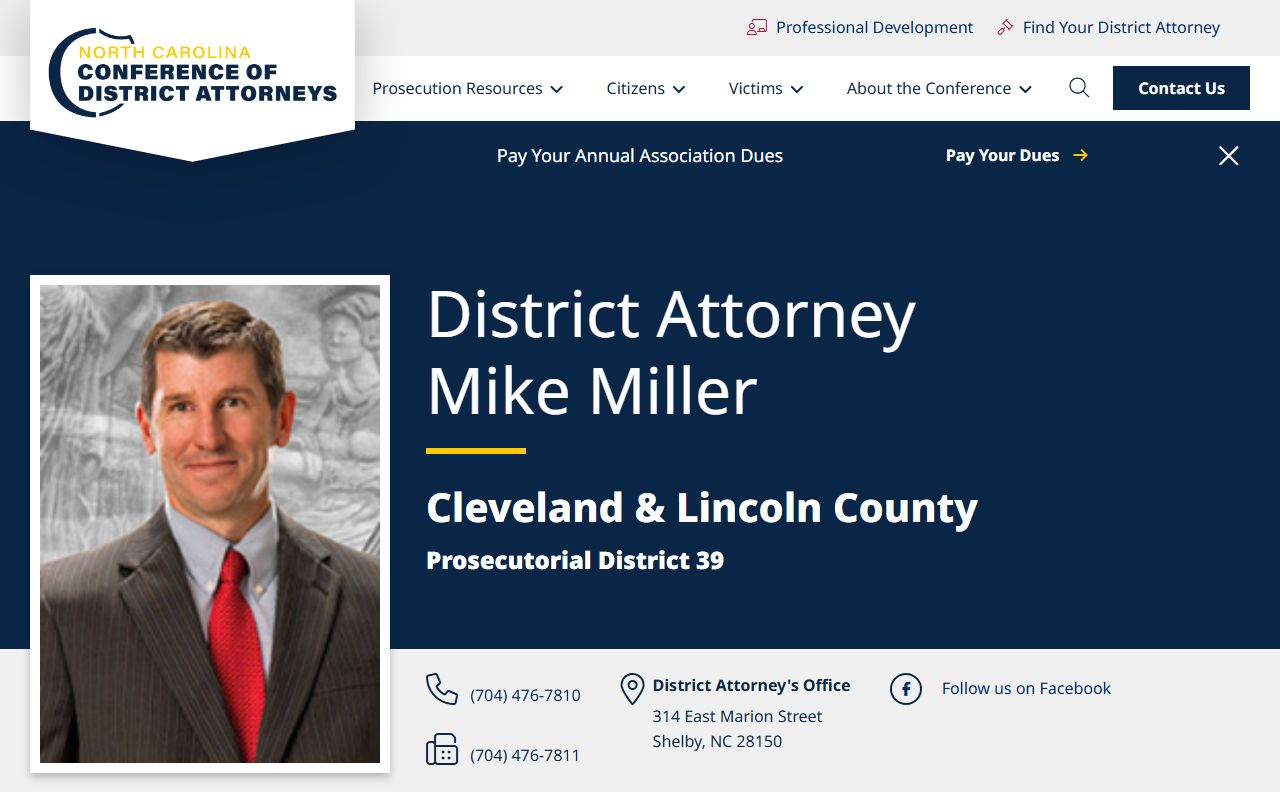
The prosecutor's role matters because criminal charges move through the court case after law enforcement and magistrate activity.
The public defense source in the manifest comes from the IDS Cleveland County page, which names Defender District 39 and the public defender office.
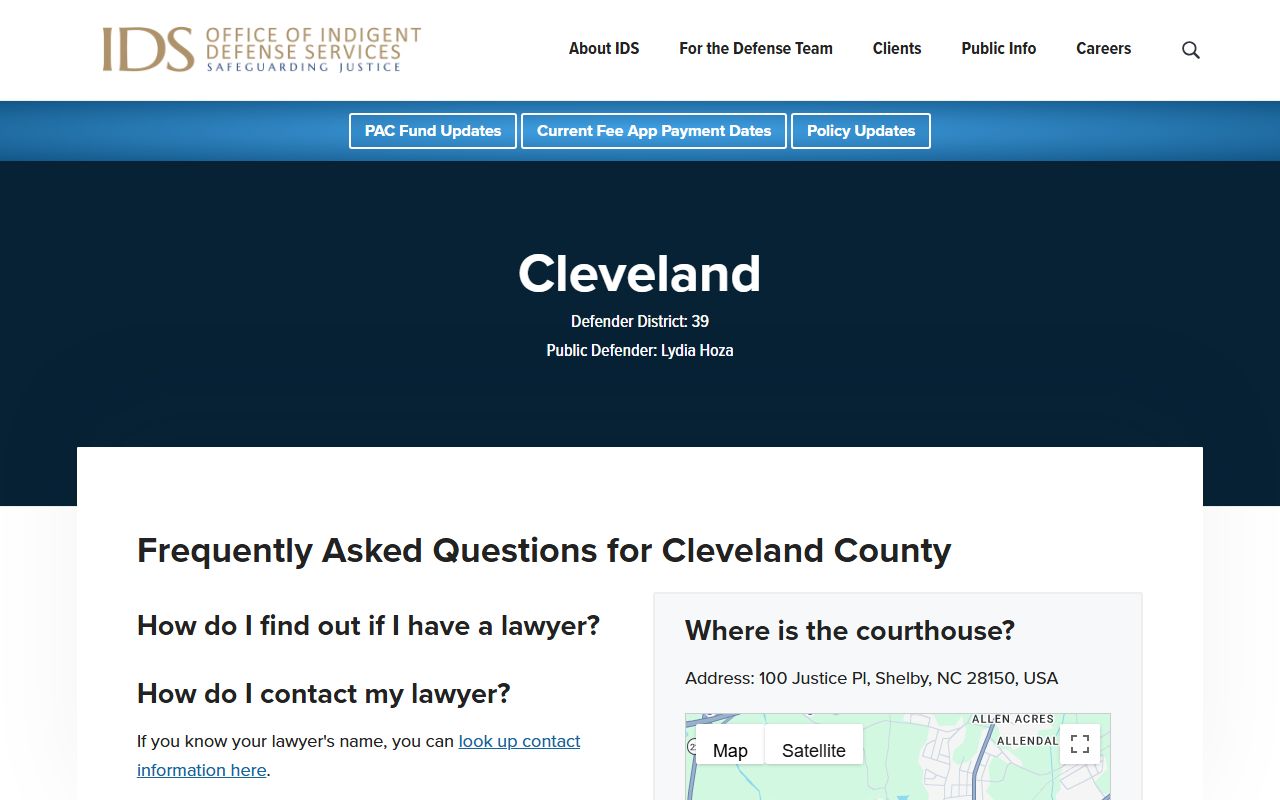
Defense representation can appear in criminal court records through attorney listings, motions, hearings, and orders.
Sealed vs Expunged Records
Restricted criminal records in Cleveland County include juvenile records, sealed cases, expunged records, and redacted data within otherwise public files. Juvenile court records are controlled by Chapter 7B and are not ordinary public adult criminal files. Sealed records are hidden because a statute or court order limits access. Expunged records are removed from official public access under an order and statute. A person should not assume that a missing Portal result means the case never existed, because older paper records, restricted records, name variations, or expunction orders may affect the public view.
| Point | Sealed | Expunged |
|---|---|---|
| Public View | Hidden or limited by statute or court order. | Removed from normal official public access after the order is processed. |
| How It Happens | By law or court sealing order. | By petition, eligibility review, and court order under an expunction statute. |
| Example Limits | Juvenile, sensitive, protected, or court-ordered confidential material. | Certain eligible nonviolent misdemeanor or felony records under statutory conditions. |
| Where to Ask | Clerk of Superior Court for access rules and order details. | Clerk of Superior Court for filing logistics and Judicial Branch expunction forms. |
The manifest capture from G.S. 15A-145.5 shows the North Carolina statute for expunction of certain nonviolent misdemeanors and felonies.
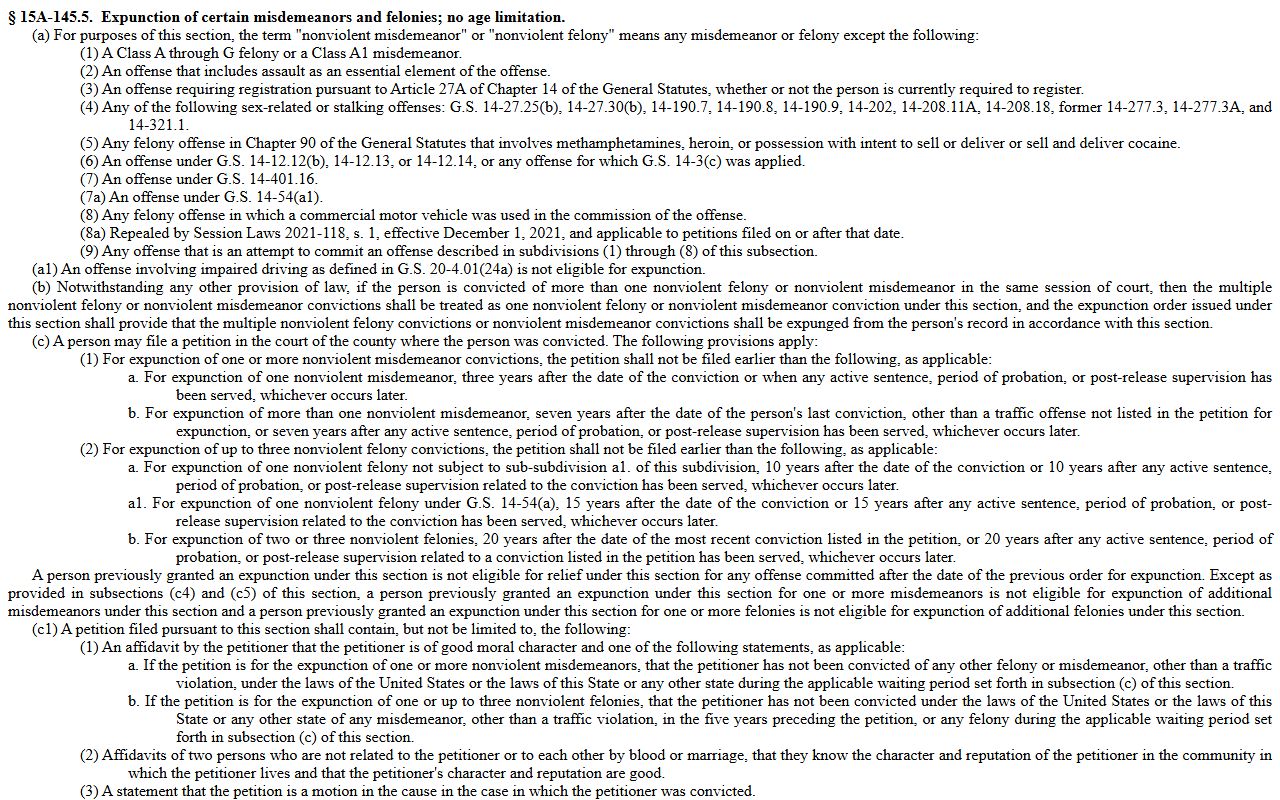
Eligibility is fact-specific, so the statute and clerk filing process matter more than a simple online search result.
Cleveland County Background Checks
Criminal background checks are not the same as browsing a docket. The Judicial Branch guidance says individuals performing background checks should use the county clerk's office. A clerk search can be done at the local courthouse and may involve public terminals or certified search options. The state public-record request form is not the right tool for local criminal background searches because NCAOC says it is not the custodian for those records.
State correction records are also separate. NC DAC offender search covers sentenced state prisoners, probationers, and parolees, not the full Cleveland County criminal court file. Sheriff P2C inmate records from Sheriff Alan Norman's office show current or recent custody and primary charge fields, not the complete prosecution history. The criminal court file is the place to confirm plea, disposition, sentence, and whether a charge ended in dismissal, conviction, appeal, or other result. The Cleveland County local rules and forms page can also matter when a criminal docket entry refers to a local form or court procedure.
Important: Use official clerk records for legal decisions, and do not treat a name-only search as identity proof.
Restricted Cleveland County Criminal Records
Juvenile delinquency, abuse, neglect, dependency, adoption, mental-health, protected-address, minor-name, financial-account, Social Security number, victim-safety, sealed, and expunged material may be hidden or redacted. Some domestic violence or protective-order records can involve public court proceedings while still limiting sensitive details. Some filings may be viewable only by parties, attorneys, agencies, or persons with a court order.
When a Cleveland County criminal court record is missing from a public search, the most useful next step is not to guess. Confirm the spelling, county, court level, date range, and case number. Then ask the Clerk of Superior Court whether the record is paper, restricted, sealed, expunged, in another county, or not a court record at all. For live custody, search the jail roster. For active warrant questions, use the sheriff, magistrate, clerk, and eCourts channels documented for warrants.